
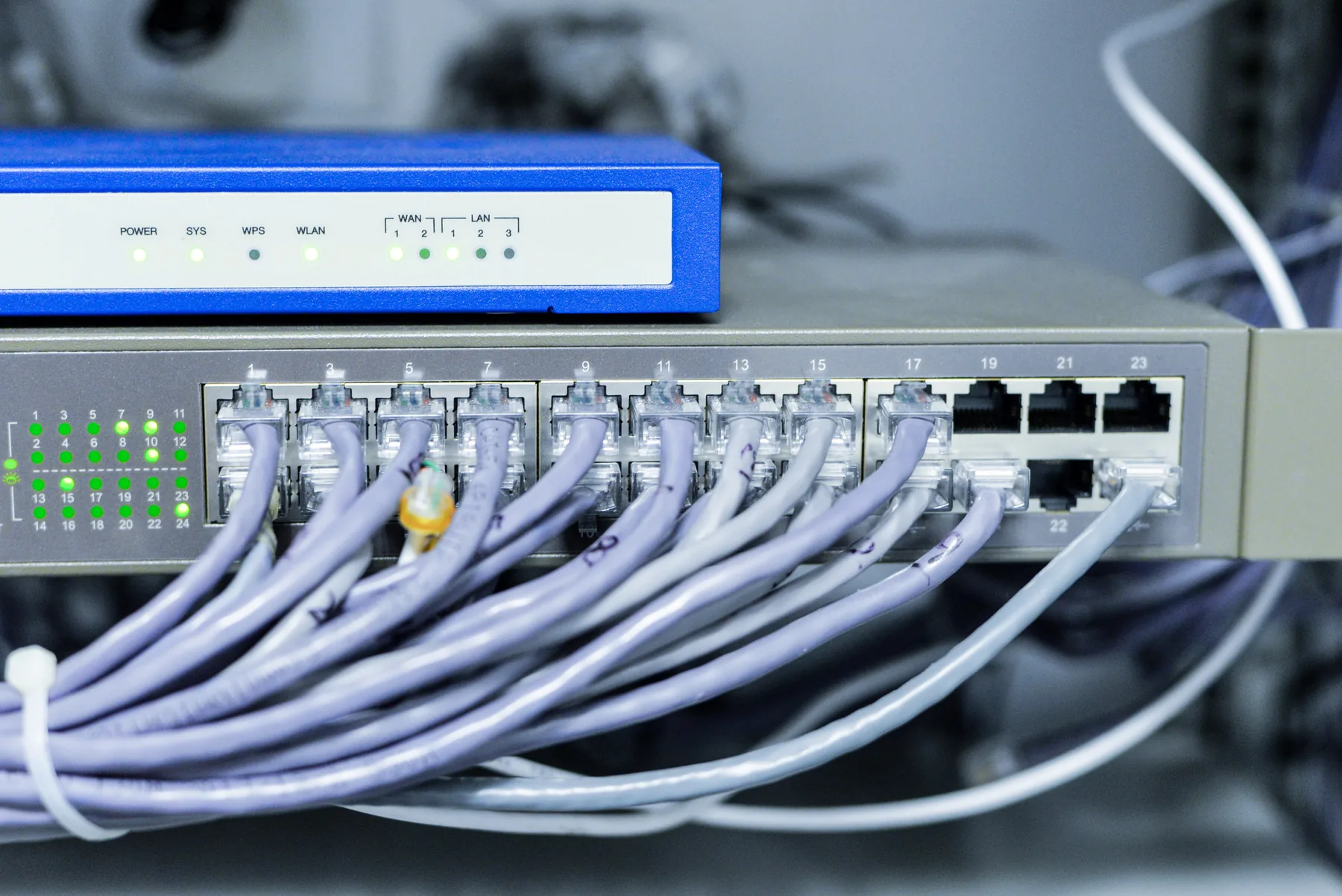
A reliable business network affects almost every part of daily work. Staff depend on internet access, shared files, printers, cloud systems, payment tools, security cameras and communication platforms. When the network is slow or unreliable, productivity drops quickly.
Good networking is more than buying a router. It involves structured cabling, correct switch capacity, Wi-Fi coverage planning, secure configuration, device organization and regular support.
Share this article
1. Faster access to business tools
A well-designed network helps staff access email, cloud applications, internal systems and shared resources without unnecessary delays. This improves response time and reduces frustration during busy hours.
Stable connectivity allows teams to work without constant interruptions.
2. Better Wi-Fi coverage
Many offices rely on Wi-Fi, but one router cannot serve every layout properly. Walls, distance, number of users and device type affect signal quality. Planning access points properly gives better coverage in offices, shops, schools and churches.
3. Cleaner structured cabling
Messy cables make troubleshooting harder and can cause avoidable downtime. Structured cabling keeps workstations, routers, switches, CCTV recorders and printers organized. It also makes future expansion easier.
4. Improved security
Business networks should separate staff devices, guest Wi-Fi, CCTV systems and sensitive office equipment where possible. Secure passwords, router settings and access controls reduce unnecessary risk.
5. Easier support and growth
When your network is documented and properly configured, maintenance becomes faster. Abrandix IT Solutions supports organizations with network setup, troubleshooting, upgrades and practical IT support from North-Kaneshie, Accra, Ghana.
What a good office network should include
A productive office network should include the right router, properly sized switches, neat cabling, secure Wi-Fi, labeled points and a clear plan for future expansion. It should also support the tools your team uses every day, including printers, cloud software, file sharing, CCTV systems and access-control devices.
For larger offices, separate networks for staff, guests and security devices can improve both performance and protection. This helps keep visitors away from sensitive systems while allowing staff to work efficiently.
Why planning matters before installation
Many network issues come from rushed installations. Before running cables or mounting devices, it is important to understand the building layout, number of users, internet speed, device locations and expected growth. Planning reduces wasted materials and prevents weak coverage areas.
Abrandix IT Solutions helps organizations assess their environment, install reliable networking equipment and provide ongoing support so the network remains useful as the business grows.